
The Ultimate Day Trip to Nara: A Complete Guide
Planning a trip to Kyoto or Osaka? Don’t miss the chance to take a peaceful, culture-filled day trip to Nara, Japan’s first capital and one of its most charming small cities. Just under an hour from both cities, Nara is an easy escape that offers ancient temples, lush parks, and those famous friendly deer.
On my visit, I was surprised by how much I fell in love with Nara’s quiet energy. It felt slower than Kyoto but just as rich in history. Between bowing deer, giant Buddha statues, and mochi-making, there’s something unforgettable around every corner.
This guide will walk you through everything you need to know to plan the perfect day trip to Nara, from when to go and how to get there to what to eat and which temples not to miss.
Table of Contents
FAQ’s about a Day Trip to Nara
Is one day enough to see Nara?
Yes, a full day is perfect for hitting the highlights—especially if you start early. You can walk between most attractions, so it’s very doable in one day.
Do I need to book anything in advance?
Yes, if you plan to ride the Aoniyoshi Limited Express, you will want to book this as soon as you know your date. If you don’t care what Limited Express train you ride, you can purchase your tickets at the train station. You will also want to book any tours in advance.
Are there lockers at the Nara train stations?
Yes, both JR and Kintetsu stations have coin lockers. If you’re traveling between cities and stopping in Nara for the day, you can stash your luggage easily.
Can I visit Nara and Kyoto on the same day?
Technically yes, but I wouldn’t recommend it unless you only want to see a few sites. I would highly recommend this tour from Kyoto or Osaka if you want to see both in one day! Expect to be on a bus for long periods of time, but you will get to see it all!
How far is Nara from Kyoto and Osaka?
The fastest way to get to Nara is on a Limited Express train, and it will take about 35 minutes.
History of Nara
Before Tokyo and Kyoto, there was Nara. This peaceful city was actually Japan’s very first permanent capital, established in 710 during the Nara Period. It only held the title for about 75 years, but in that short time, Nara became a center of politics, culture, and Buddhism that still shapes Japan today.
Walking through Nara feels like stepping back in time. The city is filled with UNESCO World Heritage Sites, including some of the country’s oldest and largest temples.
I loved how quiet and spiritual it felt compared to bustling Kyoto. Even the deer seem to move at a slower pace, and you’ll meet a lot of them!
When is the best time to visit Nara?
I recommend visiting Nara in the spring or fall. April brings cherry blossoms, and Nara Park turns into a fairytale landscape. In the fall, especially around late October and November, the temple grounds explode in color with red and gold leaves.
Try to visit on a weekday. Weekends and Japanese holidays bring in big school groups and local tourists, which makes the peaceful atmosphere a little harder to enjoy.
The best way to get to Nara from Kyoto and Osaka
Getting to Nara is quick and easy, whether you’re coming from Kyoto or Osaka. From Kyoto, you can take the JR Nara Line from Kyoto Station—about 35 minutes on the rapid train. From Osaka, take the Kintetsu Nara Line from Osaka-Namba Station for about 35 minutes.
Personally, I prefer arriving via Kintetsu Nara Station instead of JR Nara Station. It’s a shorter walk to the main sights, and there are more food options nearby. If you don’t have a JR pass, then taking a Limited Express train is the best option!
Pro tip: If you’re using a JR Pass, the JR option is free. But if you don’t have a pass, the Kintetsu line is often faster and drops you closer to the park.
If you have a rental car, you can also drive to Nara. The drive will take approximately 1 hour from Kyoto and 40 minutes from Osaka. If you are going on a tour, they usually take a bus, so I would recommend starting in Osaka for a shorter drive.
Ride the Scenic Aoniyoshi Limited Express
You have probably seen this famous train on social media, so let’s talk about how you can reserve it! The Aoniyoshi Limited Express is a special sightseeing train that runs between Kyoto, Nara, and Osaka via the Kintetsu line.
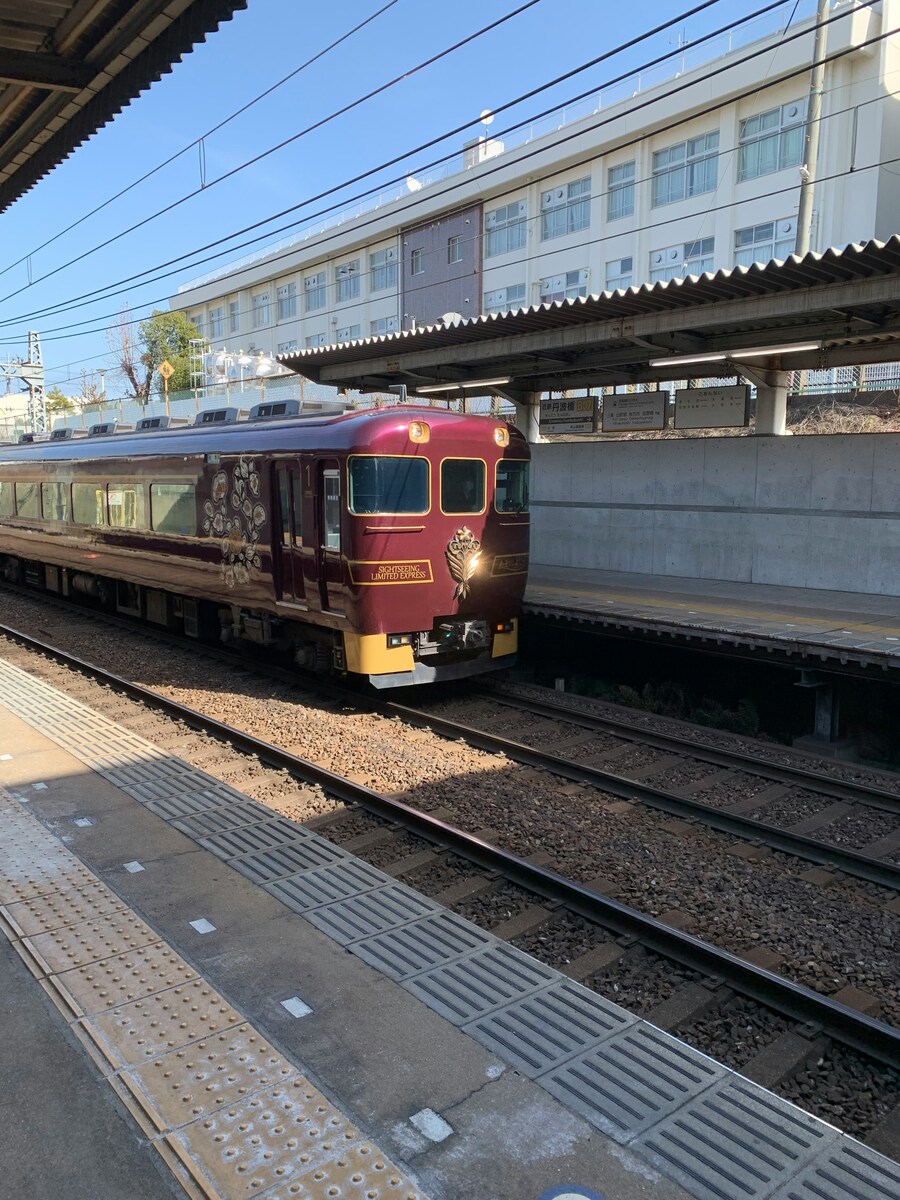
This train has an elegant interior design inspired by classical Nara architecture, with plush velvet seating, wood accents, and huge windows that make the journey extra scenic. It’s a perfect way to slow down and enjoy the ride to Nara!
This is a very popular train, so you will need to reserve seats in advance. I would recommend first looking at the timetables to see when this train is running, then you can search for tickets at those times. If you can’t find availability going there, you may be able to find it going back!
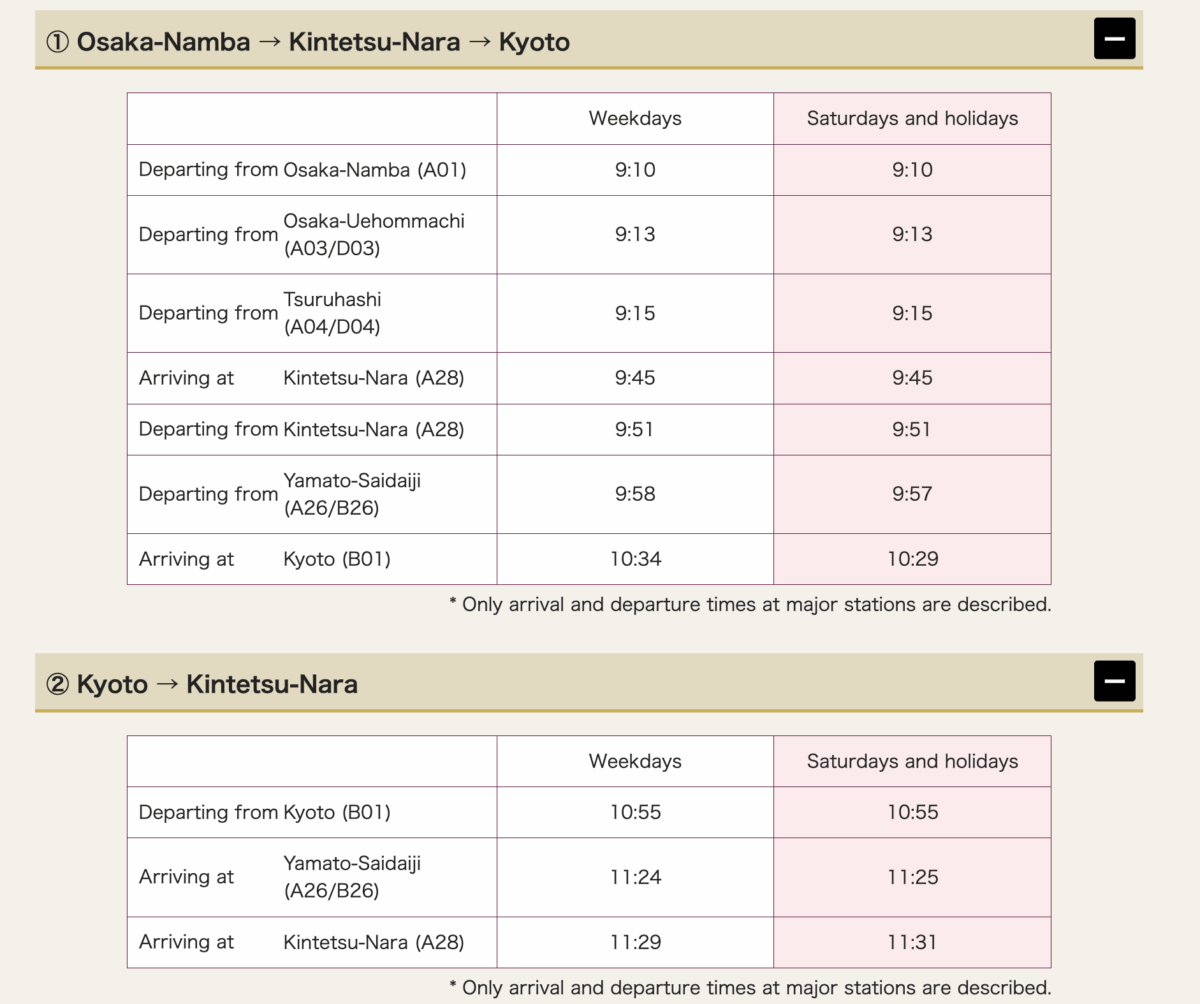
From Osaka, you will want to search from Osaka Namba Station(A01) to Kintetsu Nara(A28). If you are traveling from Kyoto, you will search from Kyoto Station(B01) to Kintetsu Nara(A28). Both routes will take approximately 35 minutes.
Tickets can be booked online at the Kintetsu Railway English site, their mobile app, or at Kintetsu station ticket counters. I recommend booking online in advance because sometimes the ticket counters will not be in English. The upgrade is minimal, and the experience is well worth it! You can see ticket prices below.
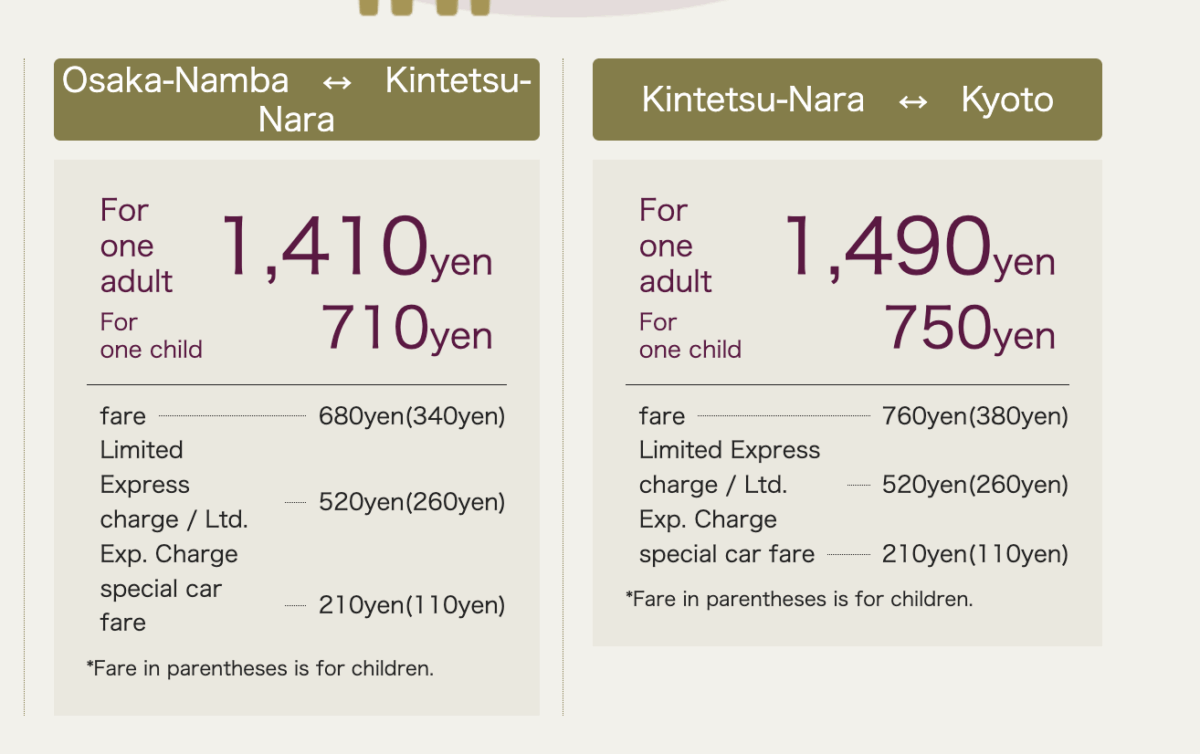
If you can’t find tickets specifically for the Aoniyoshi train, there are several other trains that run this route as well. Just pick a time that works best for you! I was super bummed when there wasn’t any availability on the day we were traveling to Nara, so make sure you book as soon as you know the day you want to go if you want to ride this train.
Once you have your Limited Express ticket, you will still need to purchase a basic fare ticket. This was very confusing for me, but all this means is you will need to scan your Suica or any transit card before boarding, in addition to your Limited Express ticket.
Things to do in Nara
See the Deer in Nara Park
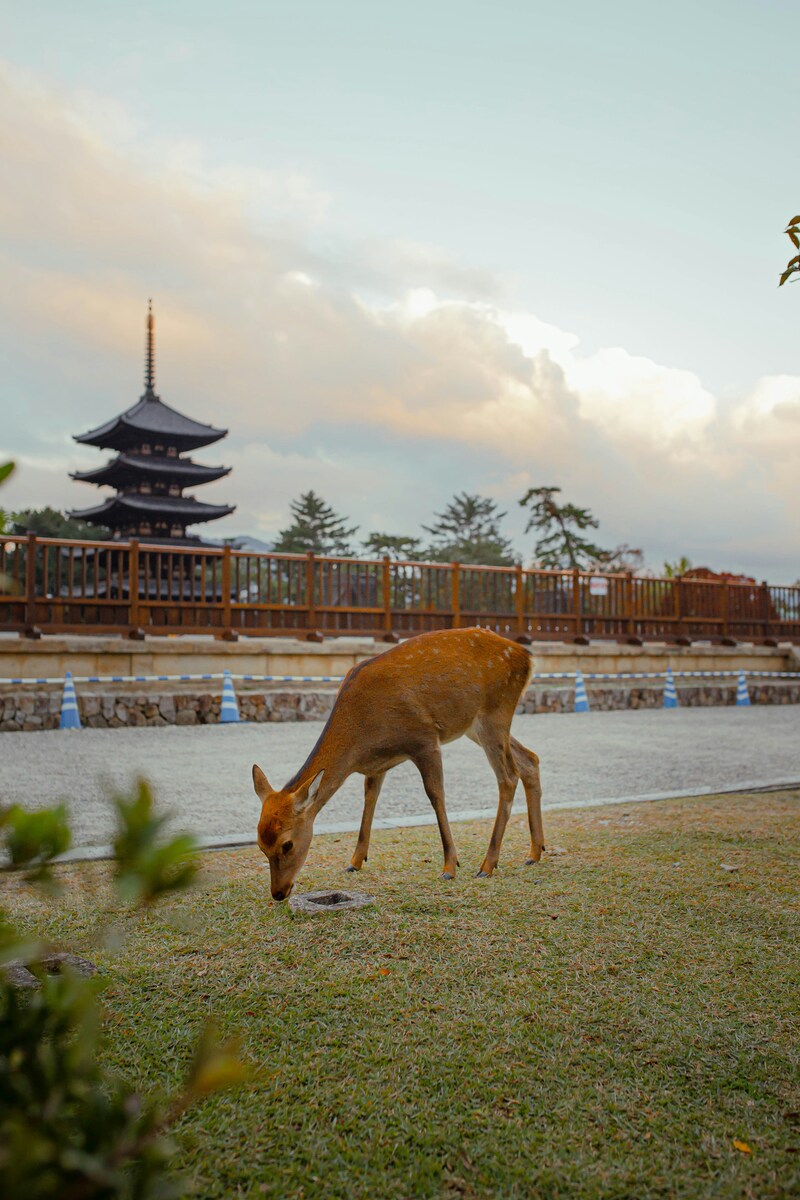
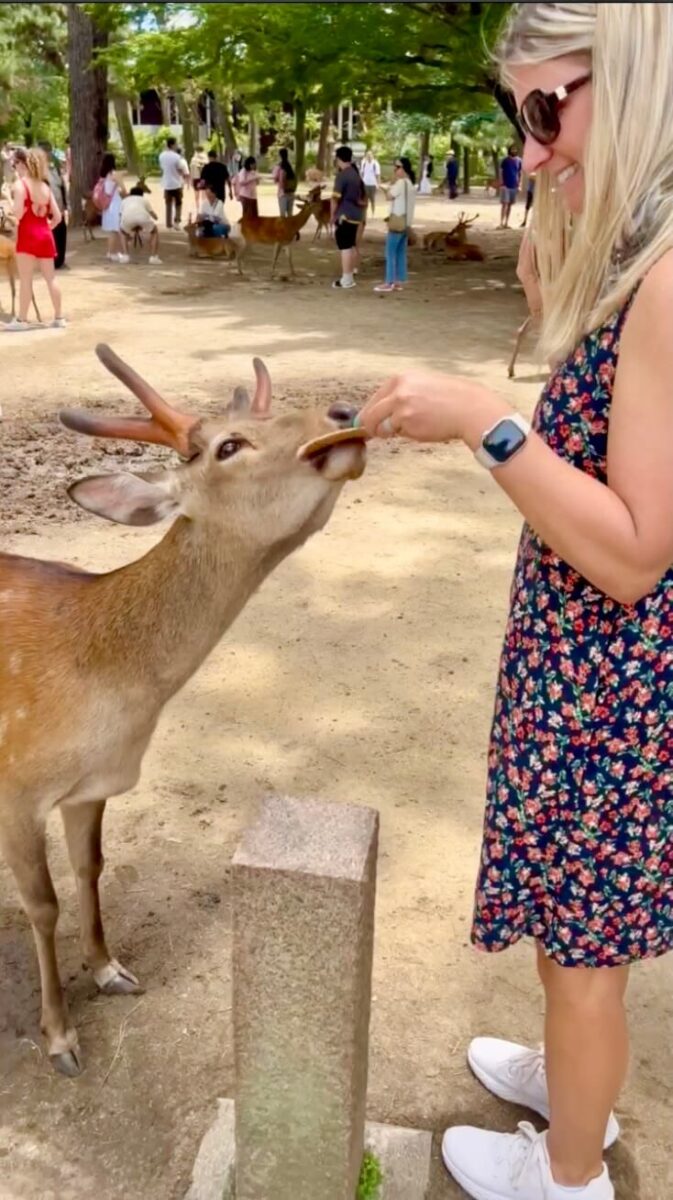
You can’t go to Nara without meeting the famous free-roaming deer. They’re considered sacred messengers of the gods and roam freely throughout Nara Park. Most of the deer will bow before you if they think you have food. It’s adorable… and can also be a little intimidating if you’re holding crackers.
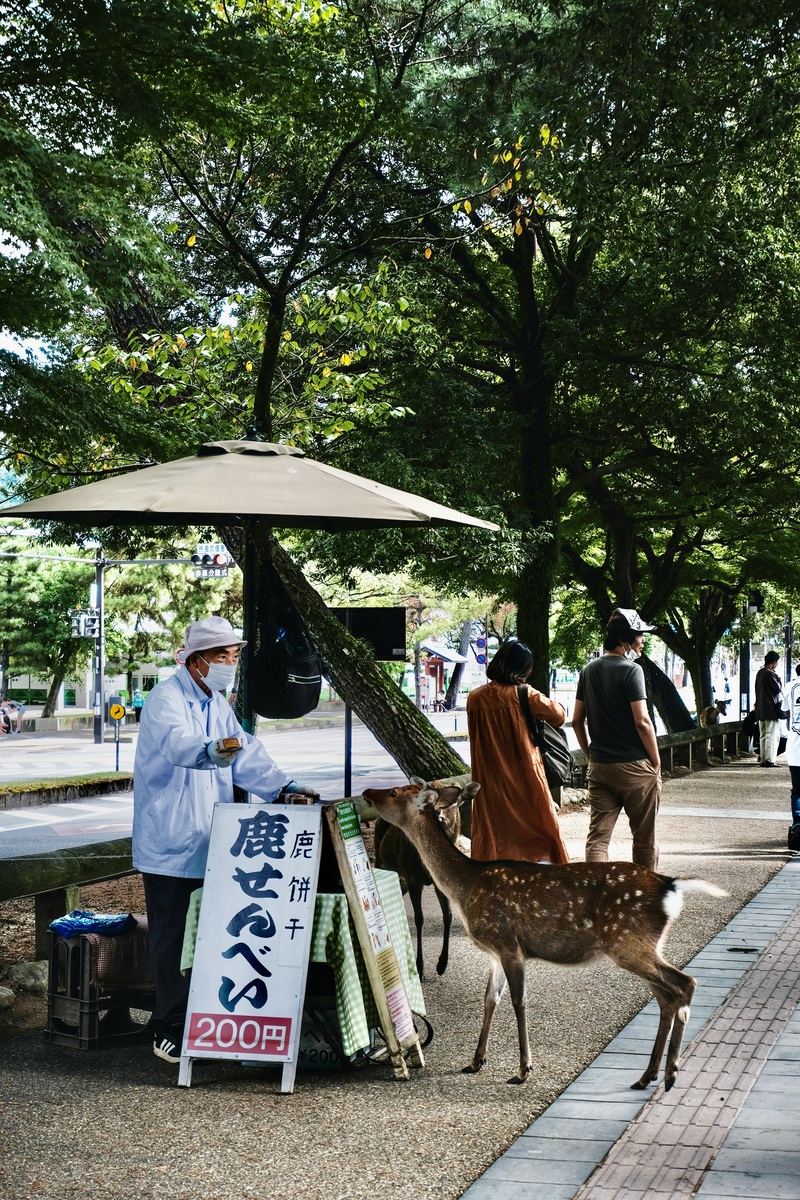
Several stands are selling the special shika senbei crackers to feed the deer. Make sure you don’t wear a short dress or skirt on this day, as the deer will stick their nose where it doesn’t belong to try and find your crackers. There is also a lot of deer poop, so it’s best not to wear your nicest shoes either. I wore a dress that went just above my knees, and I had a couple of close calls, so please learn from my mistake!
 Cracker Stand
- Deer in Nara Park
 Feeding the Deer crackers
Visit Todai-ji Temple
Todai-ji is the crown jewel of Nara and home to the Great Buddha (Daibutsu)—one of the largest bronze Buddha statues in the world. The scale is jaw-dropping, and the whole experience feels both sacred and awe-inspiring. Can you see the two men in my photo below? The Buddha makes them look so small!
You’ll first pass through Nandaimon Gate, a massive wooden gate guarded by guardian statues. From there, you’ll head to the Great Buddha Hall (Daibutsuden), which requires a ticket. Admission is currently 600 yen per adult, and you’ll pay right at the entrance to the hall. The grounds are free to explore, but the real experience is seeing the Buddha up close.
 Todai-ji Temple
 Great Buddha
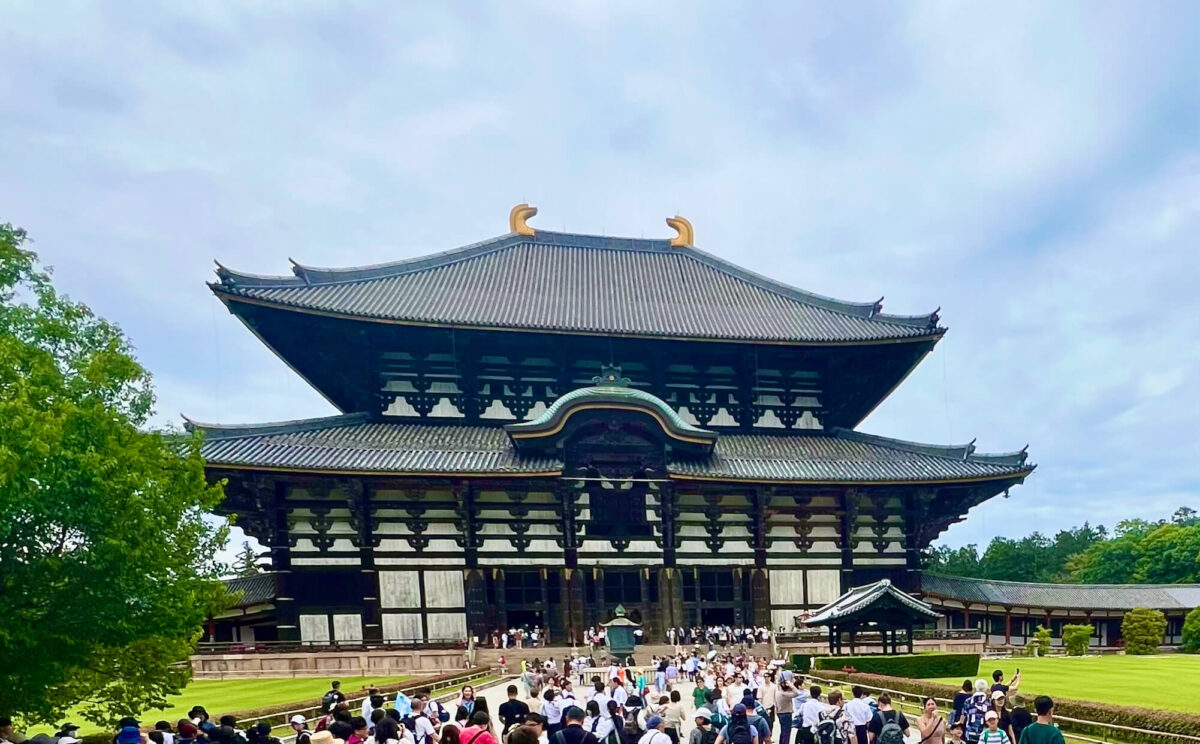
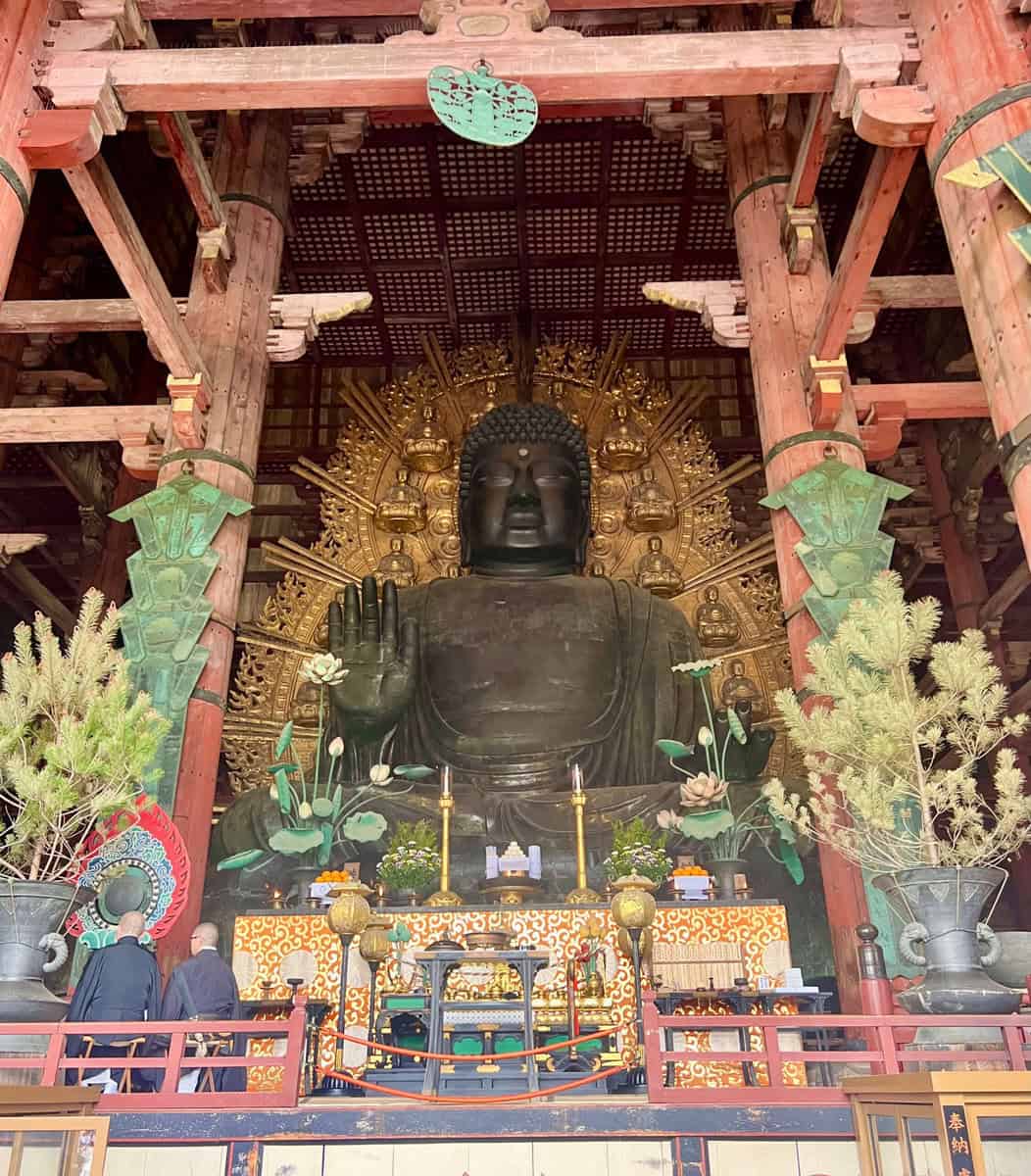
It’s one of the largest wooden buildings in the world. I recommend walking slowly, taking in the carvings, incense, and sense of calm. There’s also a famous wooden pillar with a hole in the base that’s the same size as the Buddha’s nostril; kids (and some adults) crawl through it for good luck.
Don’t Forget: If you are collecting stamps, this is a great spot to get one! You pay a little extra, but you get a handwritten stamp in Kanji!
Explore Kasuga Taisha Shrine
Kasuga Grand Shrine is known for its hundreds of bronze and stone lanterns. It’s peaceful and tucked into the forest on the east side of Nara. This shrine house is considered one of the most sacred sites in Japan!
You can walk there in approximately 30 minutes from Kintetsu Nara Station or 45 minutes from JR Nara Station. There is no admission fee to visit, and you can also see Manyo Botanical Garden, which has over 200 kinds of plants.
There is an annual lantern festival, Mandoro, that happens in early February and also mid-August, where all the lanterns light up. If you are visiting around this time, I would check the dates for that year!
Wander Through Isuien Garden
This lesser-known spot is a beautiful garden with little paths that take you along koi ponds, little waterfalls, a waterwheel, stepping stones, and little bridges. There are also benches to sit, relax, and take in the view! You can even stop by the restaurant for a bite to eat. If you are visiting in the fall, this would be a great place to see the changing of the leaves!
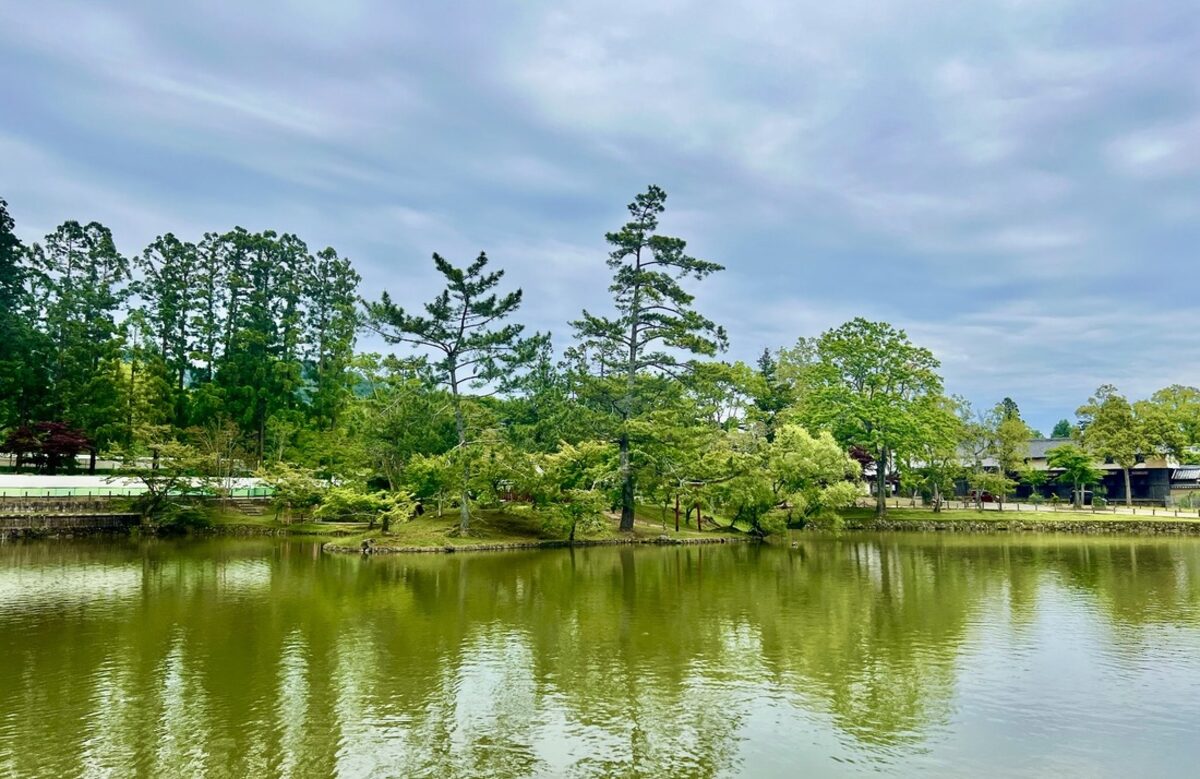
This garden is just a few minutes walk from Nara Park, but you’ll notice it is not as touristy! It’s a great way to get away from the crowds! There is a small admission fee of about $8 to get in, and it takes about 40 minutes to walk through it all.
Stop by Naramachi
This old merchant district is full of traditional wooden buildings, cute cafes, and local shops. If you still have some time, it’s a great place to slow down after the main sightseeing. There are a couple of sweet shops you can stop at like Okuta for sweet skewered dumplings or cervo bianco for some gelato!
Visit Kofuku-ji Temple
Kofuku-ji is one of Nara’s most important historic temples, and you’ll likely spot it first! The Pagoda was under construction when we were there, but you can walk the temple grounds for free. If you want to dive in deeper, you can visit the Eastern Golden Hall and the Kofuku-ji National Treasure Museum. The museum houses beautifully preserved Buddhist statues, including a stunning eight-armed Ashura statue that’s considered one of Japan’s finest. The Eastern Golden Hall, recently reconstructed, gives a glimpse into the elegance and spiritual focus of early Nara Buddhism.
 Steps to Kofuku-ji
 Kofuku-ji
 Kofuku-ji Temple National Treasure Hall
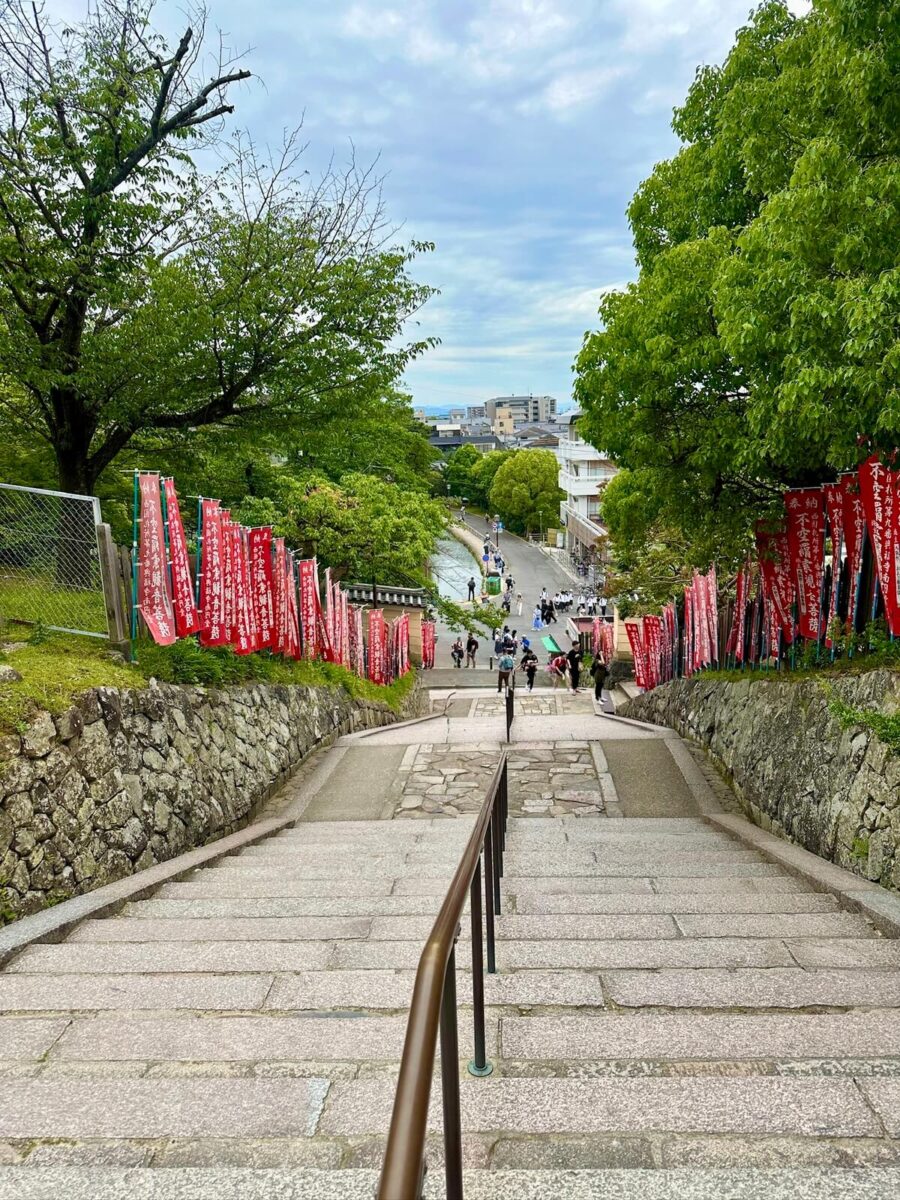
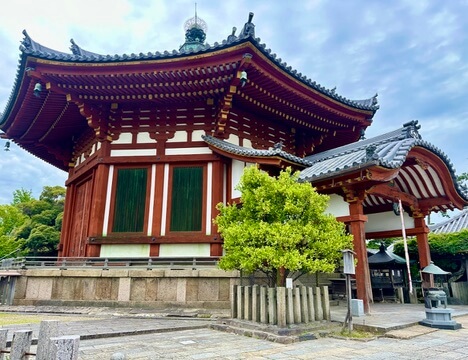
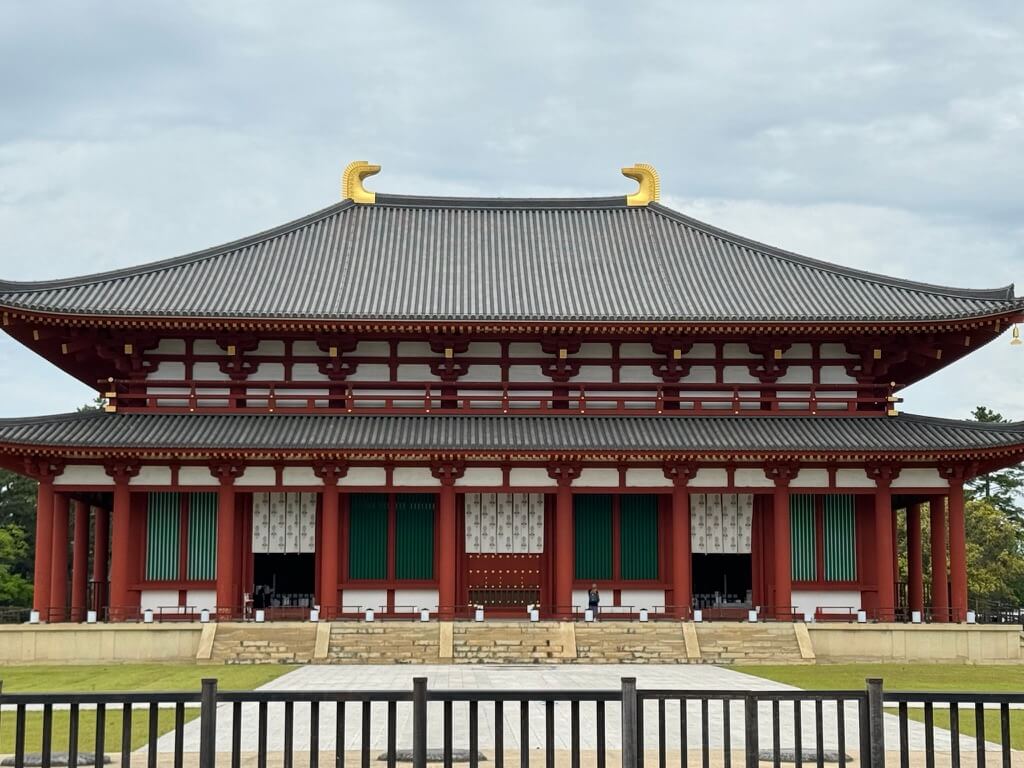
Kofuku-ji is just a short walk from both Kintetsu Nara Station and Nara Park, so it makes a perfect first or last stop during your visit.
Watch Mochi Being Made in Hashimotocho
Right off Sanjo-dori Street in Hashimotocho, you’ll find Nakatanidou, a mochi shop that’s famous for its live mochi-pounding demonstrations. If you see a lot of people gathering around a window, you’ve found it! The men work with such speed and precision, it’s really fascinating to watch!
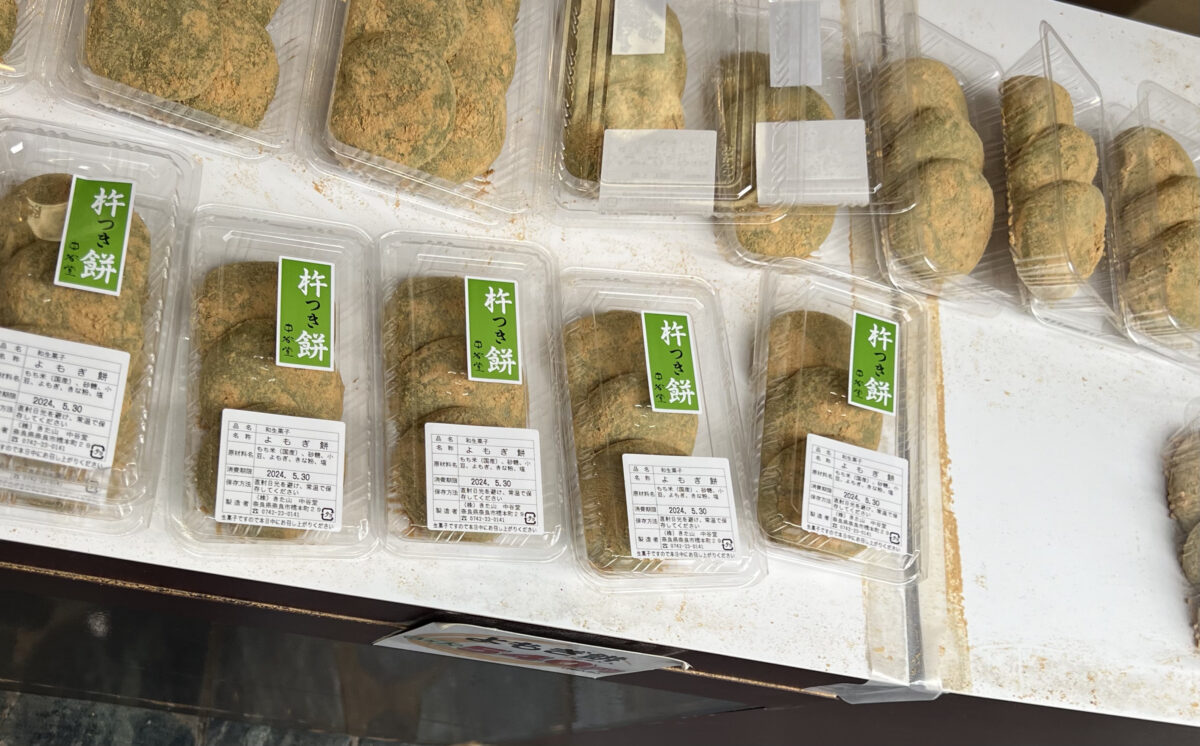
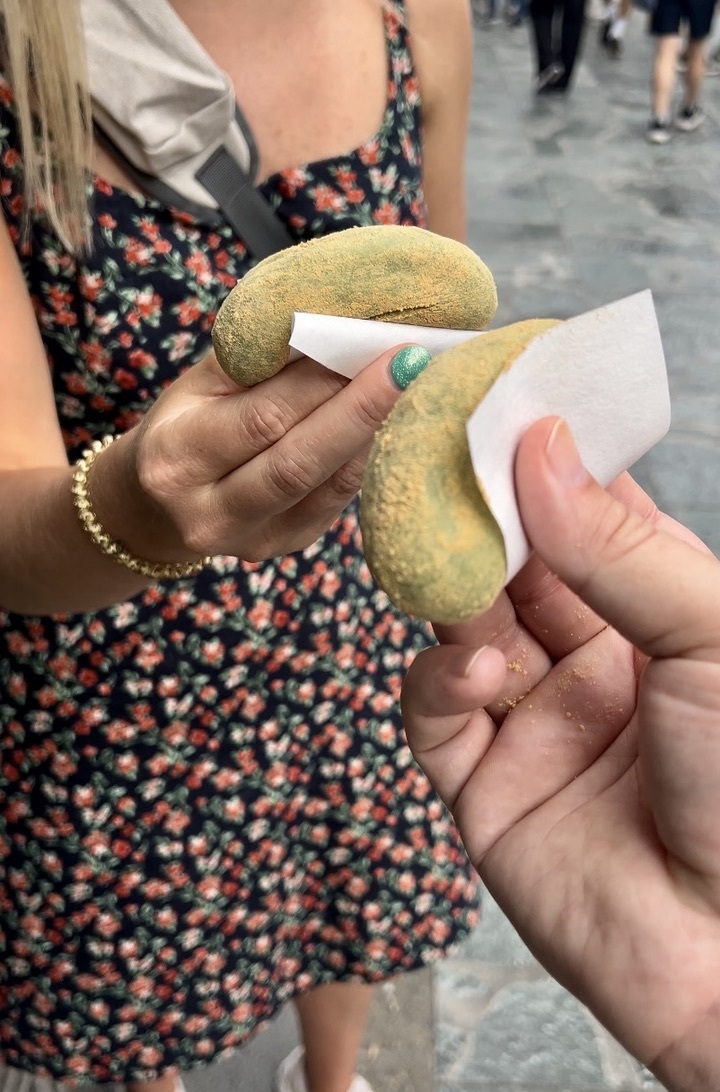
We stood in front of the shop’s window to watch the process and then bought some mochi after. It’s stuffed with sweet red bean paste, and there isn’t a whole lot of flavor, in my opinion. It was also very soft and chewy, so if you don’t like that texture, it might not be for you. It was still a cool experience to watch and taste afterwards!
Tour Options
If you would like to see all these places without figuring everything out yourself, a guided tour is a great choice! Many tours leave from Kyoto or Osaka and include all the highlights like Todai-ji, Kasuga Taisha, and Nara Park. Some bundle in stops at Fushimi Inari and Uji. You can even book a private tour if you don’t want to go with a group.
A lot of the tours will take you by bus, and you can be on it for 60+ minutes at a time, but there are better options that take the train. You can also transfer to Nara on your own, now that you know how to do this, and start your tour there!
Check out some of the top-rated tours below!
Where to Eat in Nara
After all that walking and deer dodging, you’re going to be hungry. Here are a couple of my favorite spots to grab a bite:
Gyukatsu Kyoto Katsugyu Nara
If you’ve never tried gyukatsu before, you’re in for a treat. This spot specializes in deep-fried beef cutlets that are crispy on the outside and pink and juicy in the center. You can’t miss this restaurant right outside the Kintetsu Nara Station with a big bull in the front.
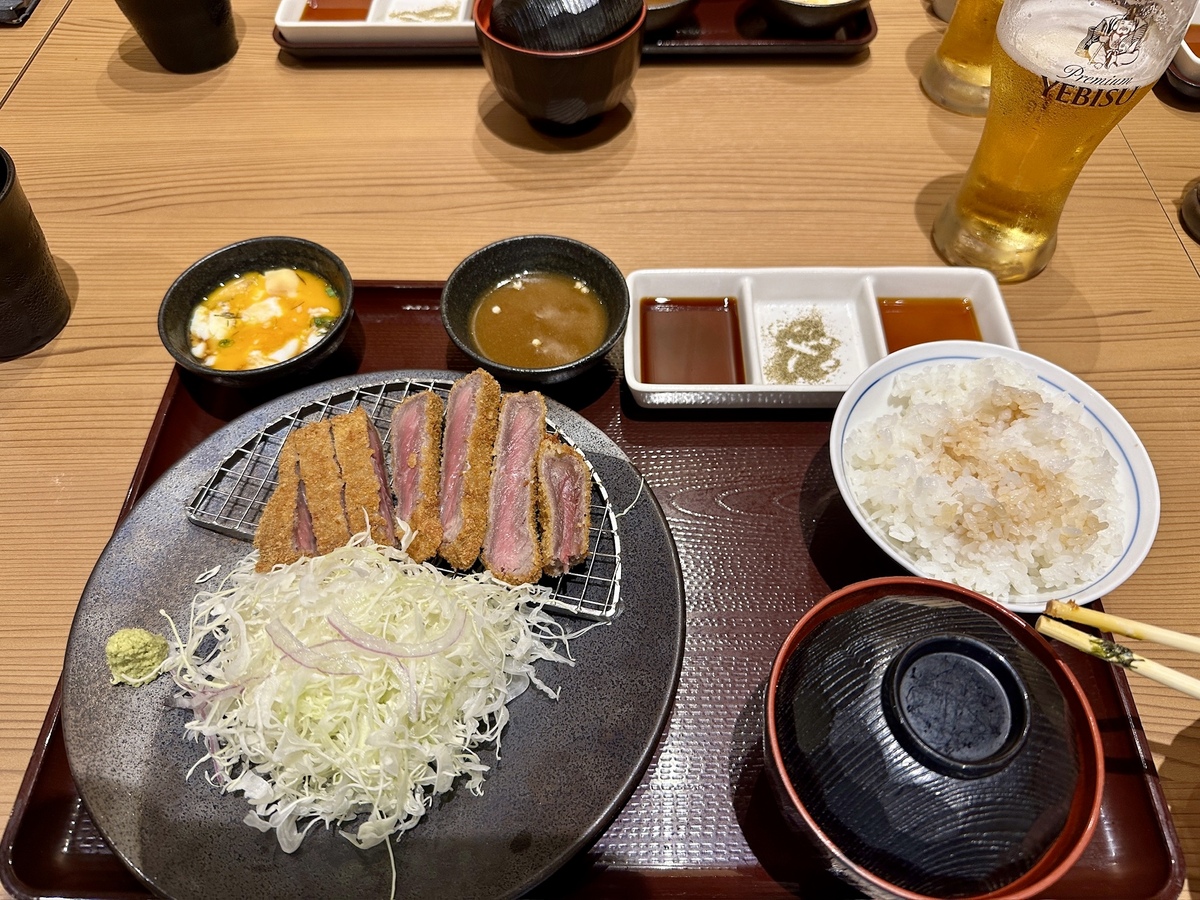
We ordered the wagyu meal, and it was incredible—tender, flavorful, and perfectly satisfying after a full day of sightseeing.
Haru Naramachi
If you’re in the mood for something more traditional, head to this popular Western restaurant tucked inside Naramachi. One of the star dishes is the hamburger steak made with Yamato beef and pork, served with a homemade demi-glace sauce. It’s also popular for its head-on shrimp tempura!
Short on Time: Take a stroll through Higashimuki Shopping Mall to grab a snack like yakitori, fresh fruit, or leaf-wrapped sushi!
Final Thoughts
Nara might be small, but it’s packed with charm, history, and unforgettable experiences. It’s one of those places where I felt instantly relaxed and could take a deep breath and just be for a while.
Whether you’re there for the giant Buddha, the sacred deer, serene nature, or just a chance to slow down between Kyoto and Osaka, Nara is always worth the detour. I’d absolutely visit this city again, and next time, I might stay the night!
Check out all of my other Japan blog posts below!